


2026 Insights on the Restaurant Industry from James Beard Foundation and NRA Reports Plus a Call to Action for Owners
The restaurant industry faces a pivotal moment in 2026. Two major reports—the James Beard Foundation 2026 Restaurant Industry Report and the National Restaurant Association’s 2026 State of the Industry Report—offer a clear picture of where the sector stands and where it’s heading. These reports highlight key trends, challenges, and opportunities that every restaurant and hotel owner should understand. This post breaks down the high-level findings from both reports, weighs their pros and cons, and urges struggling owners to seek help from Vanguard F&B Thynk Tank. We will also explore how Vanguard’s F&B Operational Readiness Scorecard can guide businesses toward stability and growth.

Key Takeaways from the James Beard Foundation 2026 Restaurant Industry Report
The James Beard Foundation report focuses on culinary innovation, workforce trends, and consumer expectations shaping the restaurant industry. It draws on data from restaurateurs, chefs, and diners nationwide.
Highlights
Culinary Creativity Drives Customer Loyalty
Restaurants that innovate menus with local, sustainable ingredients see higher repeat business. Consumers increasingly value authenticity and unique dining experiences.
Labor Shortages Remain a Critical Challenge
The report confirms ongoing difficulties in hiring and retaining skilled staff. Wage pressures and burnout contribute to high turnover rates.
Technology Adoption Accelerates
Digital ordering, contactless payments, and AI-driven inventory management are becoming standard. These tools improve efficiency but require upfront investment.
Pros
Emphasizes the importance of creativity and quality, encouraging restaurants to differentiate themselves.
Highlights technology as a tool to improve operations and customer experience.
Provides actionable insights on workforce management and retention strategies.
Cons
The focus on innovation may overlook smaller, traditional restaurants struggling with basic operational issues.
Technology recommendations may not be feasible for all due to cost and training requirements.
Labor challenges are acknowledged but solutions remain broad and lack specific implementation guidance.

Key Takeaways from the National Restaurant Association 2026 State of the Industry Report
The NRA report offers a comprehensive overview of economic factors, consumer behavior, and industry performance metrics.
Highlights
Sales Growth Slows but Remains Positive
The industry expects moderate sales growth of 3-4% in 2026, reflecting cautious consumer spending amid inflation concerns.
Rising Costs Pressure Margins
Food, labor, and energy costs continue to rise, squeezing profit margins. Many operators report difficulty passing these costs to customers.
Sustainability and Health Trends Influence Menus
Demand for plant-based options and sustainable sourcing grows. Restaurants adapting to these trends see improved brand perception.
Pros
Provides clear economic data to help owners plan budgets and pricing strategies.
Identifies consumer trends that can guide menu development and marketing.
Offers benchmarks for operational performance and financial health.
Cons
The report’s optimistic sales projections may not reflect regional disparities or niche market struggles.
Rising costs are a major concern, but the report offers limited advice on cost control beyond general recommendations.
Sustainability trends may require investments that smaller operators cannot afford.

Comparing Both Reports: What Restaurant Owners Need to Know
James Beard Foundation Report | National Restaurant Association Report
Culinary innovation, workforce, technology | Economic outlook, consumer trends, operational data|
Deep dive into creativity and staff challenges | Broad industry metrics and financial insights
Less practical on cost control and regional issues | Limited actionable solutions for rising costs
Use creativity and tech to stand out | Adjust pricing and menus based on economic data
Both reports agree on the importance of adapting to changing consumer preferences and managing rising costs. Yet, they also reveal that many operators lack the tools and support to implement effective changes.

Why Struggling Restaurant and Hotel Owners Should Contact Vanguard F&B Thynk Tank
The challenges outlined in these reports are real and urgent. Many restaurants and hotels face shrinking margins, staffing shortages, and operational inefficiencies. This is where Vanguard F&B Thynk Tank steps in as a vital resource.
What Vanguard F&B Thynk Tank Offers
Tailored Operational Assessments
Vanguard uses its proprietary F&B Operational Readiness Scorecard to evaluate every aspect of a business—from kitchen workflow to financial health.
Clear Action Plans
Based on the scorecard results, Vanguard provides customized strategies to improve efficiency, reduce costs, and enhance customer experience.
Expert Guidance and Support
Their team includes industry veterans who understand the practical realities of running food and beverage operations.

The F&B Operational Readiness Scorecard Explained
This scorecard is a comprehensive tool that measures readiness across key operational areas:
Staffing and Training
Evaluates workforce skills, scheduling, and retention practices.
Menu and Product Management
Assesses menu design, ingredient sourcing, and waste control.
Financial Performance
Reviews cost structures, pricing strategies, and profitability.
Technology and Systems
Checks the use of digital tools for ordering, inventory, and customer engagement.
Customer Experience
Measures service quality, ambiance, and feedback mechanisms.
By scoring each area, the scorecard identifies strengths and weaknesses, helping owners prioritize improvements that deliver the greatest impact.

Practical Steps for Owners Using Insights from Both Reports and Vanguard’s Scorecard
Assess Your Current Situation
Use the F&B Operational Readiness Scorecard to get a clear picture of your business health.
Focus on High-Impact Areas
Prioritize staffing solutions, cost control, and menu innovation based on scorecard results and report insights.
Invest in Technology Wisely
Adopt digital tools that fit your scale and budget to improve efficiency without overwhelming your team.
Adapt to Consumer Preferences
Incorporate sustainable and health-conscious options that align with your brand and customer base.
Seek Expert Help
Contact Vanguard F&B Thynk Tank for tailored advice and ongoing support to navigate challenges.
Final Thoughts and Next Steps
The 2026 reports from the James Beard Foundation and the National Restaurant Association paint a clear picture: the restaurant industry is evolving, but many operators face serious hurdles. Creativity, technology, and sustainability offer paths forward, but rising costs and labor shortages threaten profitability.
Struggling restaurant and hotel owners should not face these challenges alone. Vanguard F&B Thynk Tank’s F&B Operational Readiness Scorecard provides a practical, detailed way to understand your business’s strengths and weaknesses. Their expert team can help you build a clear, actionable plan to improve operations and secure your future.
If your restaurant or hotel is struggling, reach out to Vanguard F&B Thynk Tank today. Taking this step could be the difference between closing doors and thriving in 2026 and beyond.
Free Resources From Vanguard F&B Thynk Tank
Vanguard F&B Thynk Tank provides several high-impact,
free resources designed to help operators navigate the "recalibrated reality" of 2026.
These tools offer actionable insights to bridge the gap between surviving and thriving in a tightening market.
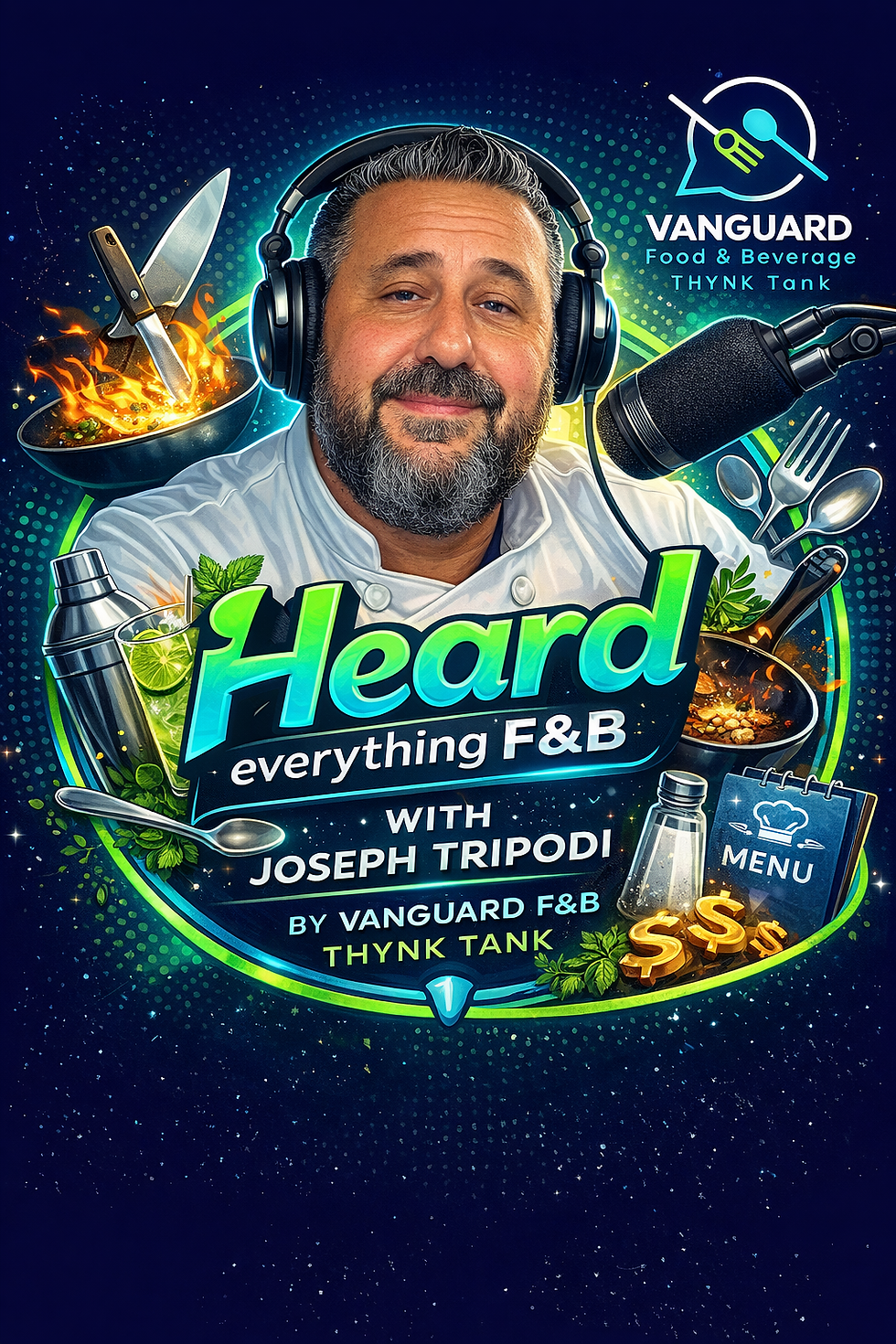
HEARD: Everything F&B Podcast with Joseph Tripodi
Hosted by Vanguard's COO, Joseph Tripodi, the HEARD: Everything F&B Podcast serves as a "real-talk" platform where industry truths are laid bare.
The Content: The podcast moves beyond high-level numbers to discuss the everyday realities of the kitchen and the P&L. Key segments include culinary art and techniques, mixology innovation, and deep dives into restaurant operations such as staffing and menu engineering.
The Mission: It is built to bring together everyone from multi-unit operators and executive chefs to bartenders and passionate home cooks to share knowledge that works regardless of the size of the operation.
Engagement: The show frequently features live sessions on Facebook and Instagram, allowing listeners to bring their specific challenges directly to the table for open conversation.
The Vanguard F&B Thynk Tank Blog
For those who prefer deep-dive analysis, the Vanguard F&B Thynk Tank Blog offers a continuous stream of invaluable insights at no cost.
Strategic Insights: The blog delivers strategies for controlling food and labor costs, improving guest experiences, and increasing overall profitability.
Industry Updates: It covers critical shifts in the F&B landscape, such as the impact of GLP-1 medications on menus and the ongoing labor retention crisis.
Educational Focus: True to Vanguard’s core values, the blog is designed as a lifelong learning tool to transform teams from the dishwasher level up to the GM.
Are you ready to audit your operation before the next crisis hits? Contact Vanguard F&B Thynk Tank at jtripodi@vanguardfoodandbeveragethynktank.com to discuss how their On-Demand Corporate F&B Team can support your business without the annual overhead.


Comments